JAKUB NENCZAK Backend & Systems
01 About 02 Work 03 Building 04 Experience 05 Contact
Open to backend & platform roles
Wrocław · PL — UTC+2

Jakub Nenczak

I build the layer nobody sees. Backend and systems engineering — distributed services, network programming, and the infrastructure that keeps them upright.

Discipline
Backend · Distributed systems · Platform
Experience
6 years — consultancy, telecom platform, freelance
Languages
Python · C / C++ · Java · Dart
Certified
CKA — Certified Kubernetes Administrator
Schooling
42 Roma Luiss · currently studying again, new field
Status
Available — building CoreQ in the meantime
§ 01

About


Profile

Six years in, and the part I still like best is the part underneath — sockets, schedulers, storage layers, the things that decide whether a system holds up at 3am. I spent a year as a consultant building a mobile app, then moved onto platform engineering for an Italian telecom company, running Kubernetes infrastructure and internal tooling for other engineers.

Alongside full-time work I went through 42 Roma Luiss, which is where the low-level habits come from: writing an HTTP server without a framework, a shell without a library, a renderer without an engine. Right now I'm studying again — a different field, a different university — mostly because stopping felt worse than being busy.

The through-line is the same either way. Read the spec, understand the constraint, then build the smallest thing that actually satisfies it.

01 — Systems & Backend
  • Python
  • C / C++
  • Java
  • Dart
  • FastAPI
  • Quarkus
  • Spring
  • POSIX / sockets
02 — Data & AI
  • PostgreSQL
  • SQLAlchemy
  • Qdrant
  • LlamaIndex
  • SQLite
  • MinIO
03 — Infrastructure
  • Kubernetes · CKA
  • Docker
  • GitHub Actions
  • Grafana / Loki
  • Supabase
§ 02

Selected Work


05 Systems
001
Domain
AI / Backend
Role
Sole author
Core
Python · Qdrant

A common data environment that reads your documents and writes new ones — ingest, chunk, embed, retrieve, then synthesise against a template. Every stage is containerised and independently observable.

Fig. 001 — Ingest & retrieval topology Async · containerised
INGEST PIPELINE STORAGE LAYER QUERY PATH UPLOAD react client FASTAPI gateway LLAMAINDEX chunk + extract EMBEDDING model QDRANT vector index POSTGRESQL metadata MINIO raw objects store raw file store metadata vectors QUERY natural language RETRIEVAL k-NN search LLM ENGINE context synthesis DOCUMENT template-filled similarity search OBSERVABILITY PROMTAIL LOKI GRAFANA app · pipeline · inference logs
Ingest is asynchronous; retrieval reads only from Qdrant, so indexing never blocks a query.
  • Built a containerised RAG backend on LlamaIndex for document chunking and metadata extraction, with each stage isolated behind its own service boundary.
  • Used Qdrant — a Rust vector database — for high-dimensional similarity search, keeping k-NN latency off the request path of ingestion.
  • Decoupled storage from day one: MinIO for raw objects, PostgreSQL for metadata, so write scaling and blob scaling are independent problems.
  • Wired the whole pipeline into Promtail → Loki → Grafana, because a synthesis step that fails silently is worse than one that fails loudly.
  • Python
  • Qdrant
  • LlamaIndex
  • MinIO
  • PostgreSQL
  • Docker Compose
002
Domain
Systems / Network
Role
Team of three
Core
C++ · POSIX

No framework, no library, no threads. One process, one select() loop, and up to 1024 concurrent file descriptors — all of them allowed to stall halfway through a read or a write without taking the server down.

Fig. 002 — Connection state machine Single thread · non-blocking
WAIT select() ACCEPT new fd → set RECV EAGAIN safe PARSE HTTP/1.1 ROUTE config match SEND partial safe CGI fork + execve STATIC file read dynamic static CLOSE Connection: close keep-alive · fd stays in the set 1024 FD BUDGET
Every transition is resumable: a partial read parks the connection and returns to select() rather than blocking the loop.
  • Bypassed every web framework and wrote the event loop and the HTTP request parser by hand in C++.
  • Single-threaded, non-blocking I/O multiplexed with select(), holding up to 1024 file descriptors without a thread per connection.
  • State-machine logic for partial socket reads and writes (EAGAIN), CGI execution via fork(), and memory safety under sustained stress.
  • C++
  • POSIX Sockets
  • TCP/IP
  • CGI
003
Domain
Concurrency
Role
Sole author
Core
C · pthreads

Resource contention with no safety net: no deadlock, no livelock, no starvation, and no thread quietly winning at the expense of another. The interesting part is not the solution — it's proving the solution holds.

  • Managed OS-level concurrency directly in C with POSIX threads and hand-placed mutexes.
  • Fine-grained locking on every shared resource — forks and stdout alike — so logging could not itself become the race.
  • Timing verified against death thresholds, because a philosopher that eats late is a correctness bug, not a performance one.
  • C
  • POSIX Threads
  • Mutexes
004
Domain
Systems / UNIX
Role
Pair
Core
C · readline

Lexing, parsing, process lifecycle, and signal handling — with exactly one global permitted, reserved for signal state. Every other piece of context has to be threaded through by hand.

  • Bash-inspired shell in C: pipes, I/O redirection including heredoc and append, and environment variable expansion with $?.
  • All builtins implemented from scratch (cd, export, unset, env, exit) with child execution via fork() / execve().
  • SIGINT and SIGQUIT handled correctly in both parent and child contexts, with zero leaks under Valgrind.
  • C
  • POSIX
  • readline
  • fork / execve
  • Signals
005
Domain
Graphics / Math
Role
Sole author
Core
C · MiniLibX

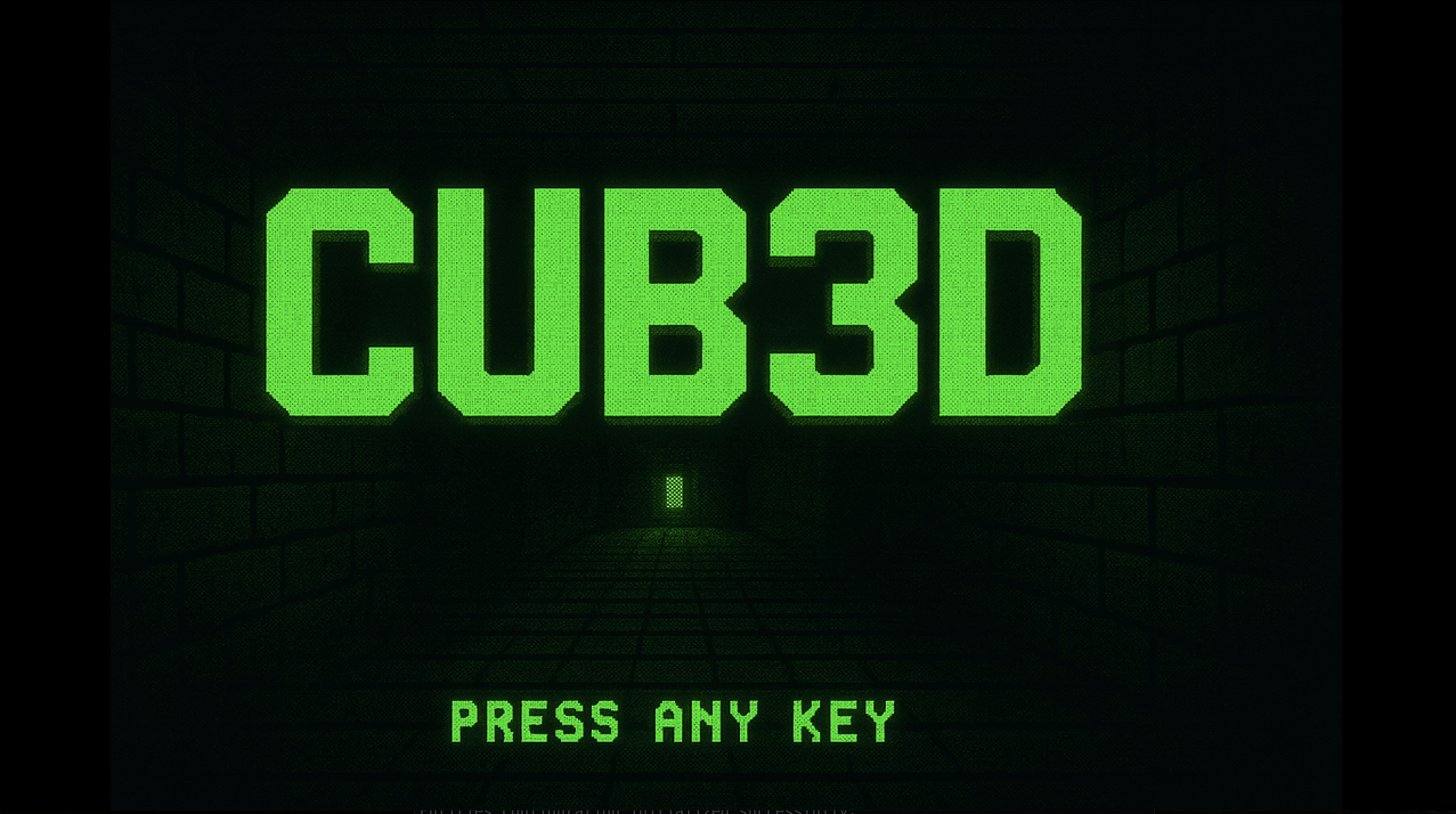
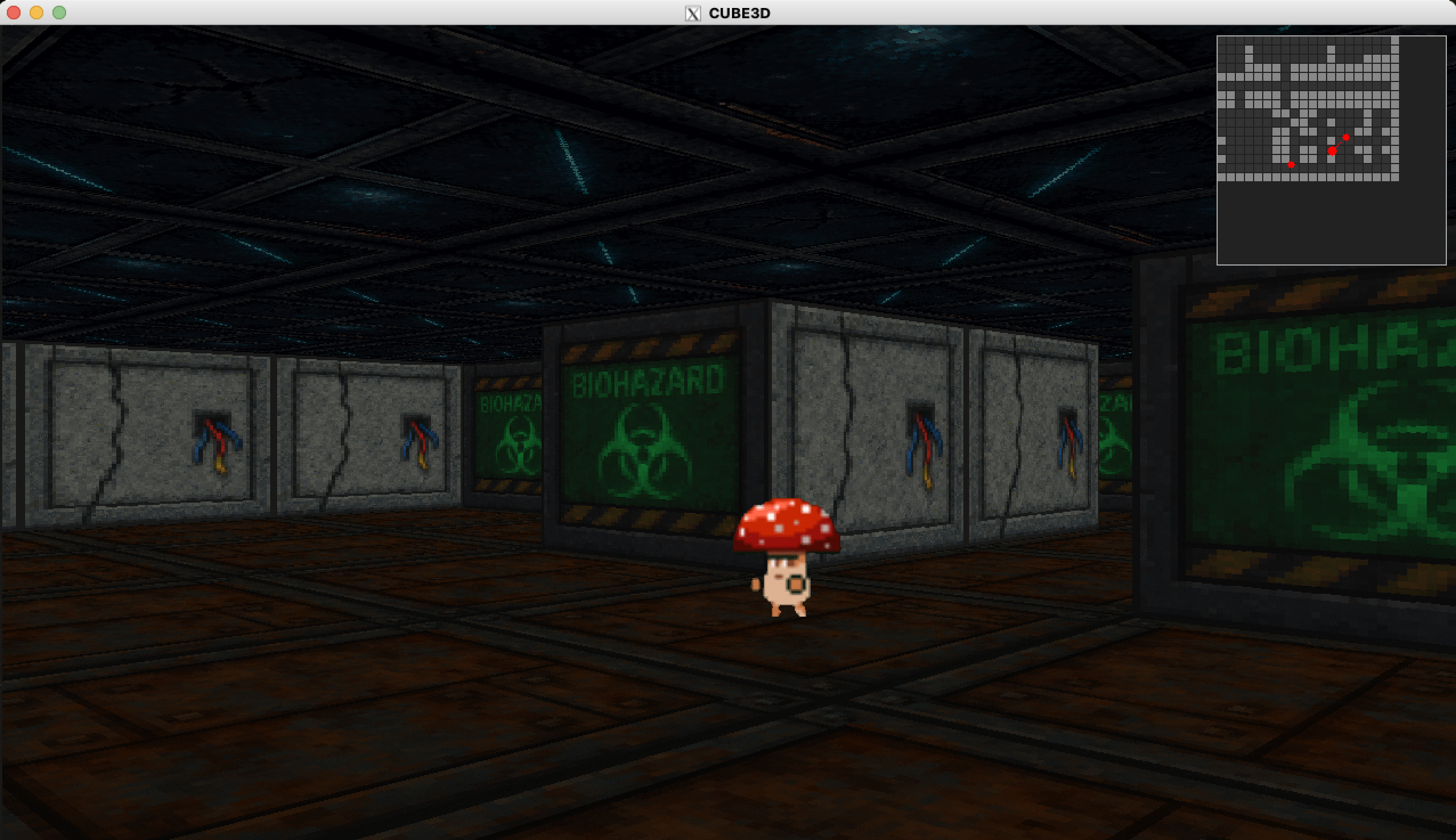
A convincing 3D world drawn from a flat 2D grid, one ray per screen column. Wolfenstein's trick, rebuilt: DDA traversal, fish-eye correction, and per-column texture sampling inside a tight pixel-buffer loop.

Fig. 005 — Rendered output DDA · per-column texturing
Cub3D rendering a textured corridor with
									distinct wall faces Cub3D rendering an open room, showing
									directional wall texturing and floor-ceiling split
  • DDA raycasting engine in C, casting one ray per vertical screen stripe against a 2D tile map.
  • Perpendicular wall distance correction to remove fish-eye distortion, with directional texture mapping for N/S/E/W faces.
  • Double-buffered pixel rendering through MiniLibX, plus a fully validating parser for the custom .cub config format.
  • C
  • MiniLibX
  • DDA Algorithm
  • Vector Math
Full project index — 08 entries
§ 03

Currently Building


In Progress
Active development

CoreQ

Automated quotation & production management · Manufacturing SMEs

A quoting and production system for small manufacturers, replacing a legacy MySQL codebase with PostgreSQL and FastAPI. The design shift that matters is a bottom-up data model: operations bind to parts, parts to quotes, quotes to orders. Nothing floats in a vacuum any more.

On top of that sit a virtual machine park — digital twins carrying hourly rates and physical constraints — material twins priced against live LME data, and a cascading analytics layer where SQL views compute margins and client whale scores without anyone touching a spreadsheet.

  • Python
  • FastAPI
  • PostgreSQL
  • SQLAlchemy
  • JSONB
  • ETL
  • React
◦ Roadmap
  1. Completed

    Foundations & data migration

    ETL pipeline with orphan filtering and transaction management, plus SQL views computing margins straight out of JSONB structures.

  2. In progress

    API & digital twin logic

    Machines and materials tables landing in SQLAlchemy; technological calculators moving from legacy category strings to real machine_id references.

  3. Planned

    Quotation interface

    Product-tree view for attaching operations directly to parts, with a sliding calculator drawer for real-time margin approval.

  4. Planned

    MES & shop floor

    Production manager dashboard, a tablet UI for operators behind a machine-operator permission matrix, and APS bottleneck detection.

§ 04

Experience


2024 — Present

KO2 s.r.l.

Nov 2024 — Nov 2025 Italy · Remote

Backend Engineer

Mobile platform replacement

  • Reverse-engineered undocumented legacy APIs through network traffic analysis, surfacing business logic nobody had written down and making integration possible.
  • Designed and built the mobile application that replaced the legacy platform, taking the workflow rewrite along with it.
  • Introduced the BLoC architectural pattern across the codebase and mentored the team on it, so the structure would survive after I left.

Platform Engineer — consultancy

Leading Italian telecommunications company

  • Managed and tuned Kubernetes infrastructure running enterprise-grade services, with scalability and reliability as the actual deliverable.
  • Built internal tooling for platform workflows, cutting the friction between engineering functions that were otherwise working around each other.
  • Worked across Quarkus and Spring microservices in the telecom domain.

Freelance

Independent Poland

Independent Developer

Two shipped mobile products

Hitspot

Travel discovery app

Google Maps for location pinning, Supabase for the real-time backend, cloud functions for server-side logic, push notifications for re-engagement.

  • Flutter
  • Supabase
  • Cloud Functions
Coeur Clothing

E-commerce for a premium label

Product catalogue, cart, and checkout for a small Polish clothing brand — built to be run by people who are not developers.

  • Flutter
  • Dart
  • Stripe
§ 05

Reference


Verbatim
I'm confident he will grow into an architect role within a few years.

“Jakub is an exceptionally bright and reliable engineer. In a short time he completed certifications such as the CKA and delivered exceptional results across multiple areas, from mobile development with Flutter to TLC Kubernetes microservices built with Quarkus/Spring. Always eager to learn, he proactively sought training and asked insightful questions.”

“It was a pleasure working with him and I'll miss him chasing me on the corridor asking for software architecture courses and books. I'm very sorry to lose such a talented young engineer and I compliment whoever will choose him for his next role.”

§ 06

Contact


Reply within a day

Got a system that needs
building, fixing, or
explaining?